




Preventative pet care is an ongoing, proactive approach to veterinary medicine that combines wellness exams, vaccinations, parasite prevention, dental checks, nutritional guidance and screening bloodwork to catch health problems early, often before your pet shows any symptoms. In Langley, BC, healthy adult dogs and cats need a wellness exam once a year, while puppies, kittens and senior pets (roughly age 7 and up) benefit from checkups every six months. Walnut Grove Animal Hospital in Langley has built age-based preventative care plans for the local community for more than 40 years.
What Does Preventative Pet Care Actually Mean?
Preventative pet care is the veterinary equivalent of a car's regular maintenance schedule — the goal is to catch small issues before they become expensive, painful or life-threatening ones. Rather than a single event, it's an ongoing relationship between you, your pet and your veterinary team that typically covers:
- Regular, scheduled wellness examinations
- Core and lifestyle-based vaccinations
- Year-round parasite prevention (fleas, ticks, heartworm, and intestinal parasites)
- Dental assessments and professional cleanings
- Nutritional counselling and weight management
- Screening bloodwork and diagnostic lab work
- Microchipping and permanent identification
- Behavioural and lifestyle guidance as your pet ages
The distinguishing feature of preventative medicine is that it's proactive, not reactive — your vet isn't waiting for a problem to show up; they are actively looking for early warning signs at every visit.
Why Is Preventative Care So Important for Pets?
Cats and dogs are biologically wired to hide signs of pain or illness — a survival instinct inherited from wild ancestors who couldn't afford to look vulnerable. In practical terms, this means that by the time your pet is visibly limping, drinking excessively or refusing food, an underlying condition may have already been developing for months. Preventative care closes that gap by using physical exams and lab screening to surface problems your pet can't and won't show you on their own.
There is also a financial argument. Managing a chronic condition that's caught early (mild kidney insufficiency, early dental disease, a small skin mass) is almost always less expensive and less invasive than treating the same condition once it has progressed to an emergency.
Why Preventative Pet Care Matters Specifically for Pet Owners in Langley, BC
Langley's climate, geography and lifestyle create a specific set of risk factors that make a proactive wellness plan especially valuable for local pet owners:
- A mild, wet Fraser Valley climate keeps fleas and ticks active for most of the year, rather than just during a short summer season, which raises the year-round risk of flea infestations, tapeworms, and tick-borne illnesses like Lyme disease.
- Coyotes, raccoons and other wildlife are common around Langley's greenbelts, trails and semi-rural properties, increasing pets' exposure to parasites, injury and disease transmission.
- Off-leash areas, dog parks and boarding facilities are popular throughout Walnut Grove, Willoughby, Brookswood and Fort Langley, which raises the importance of staying current on lifestyle vaccines like bordetella (kennel cough) and canine influenza.
- Rural and acreage properties around Langley expose pets to standing water, wildlife droppings, and unfamiliar plants and fungi, all of which carry their own preventative-care considerations.
- A growing, pet-dense community means more shared spaces — daycare, grooming, boarding where preventable, contagious illnesses can spread quickly without proper vaccination and parasite control.
The Core Pillars of a Preventative Pet Care Program
What Happens During a Comprehensive Wellness Exam?
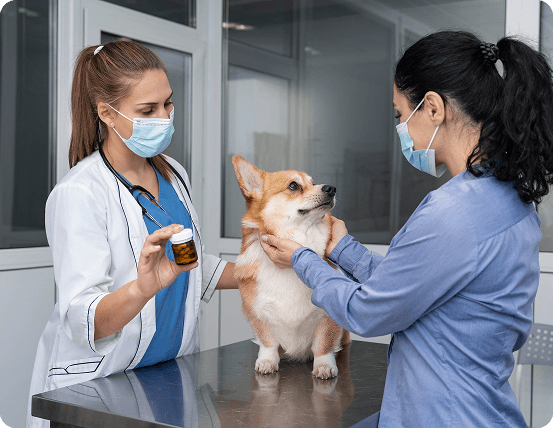
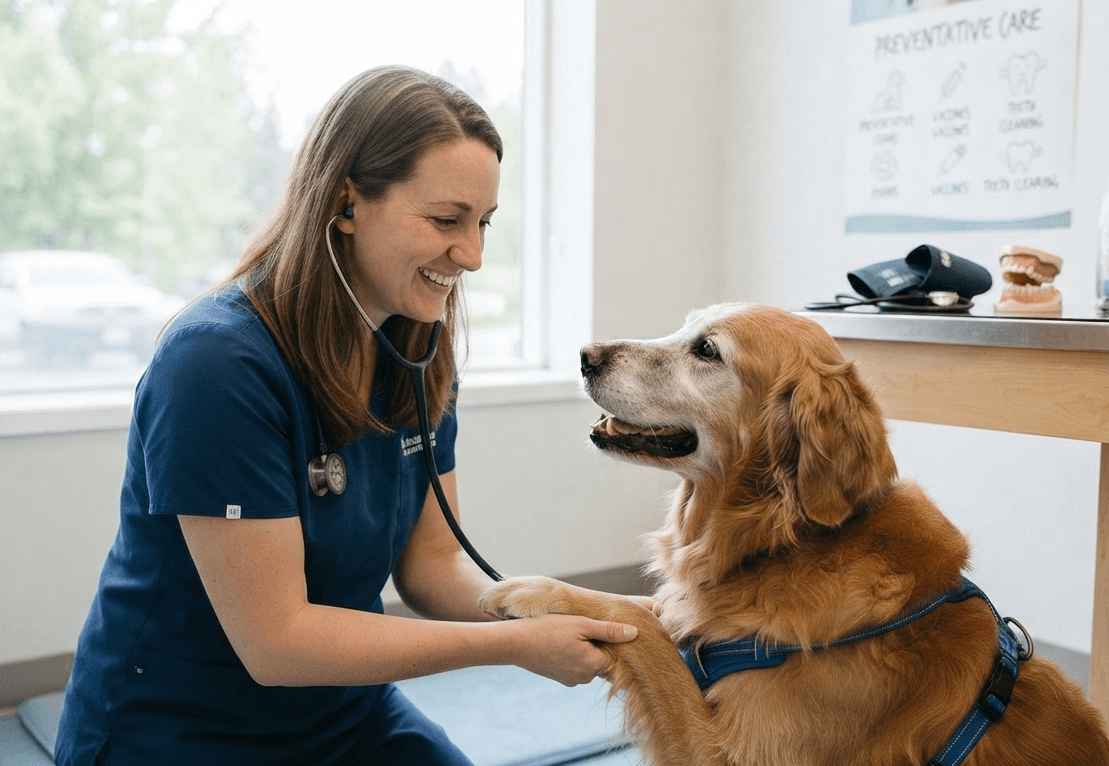
A wellness exam is far more thorough than a quick once-over. A comprehensive nose-to-tail exam typically includes:
- Listening to the heart and lungs for murmurs, arrhythmias, or abnormal breathing sounds
- Palpating the abdomen to check organ size and detect masses
- Assessing joints, gait, and mobility for early signs of arthritis
- Recording weight and body condition score over time
- Examining the skin and coat for lumps, parasites, or allergic reactions
- A preliminary dental and oral health screening
- Checking eyes, ears, and lymph nodes for abnormalities
This is where subtle changes — a new heart murmur, a small lump, early joint stiffness — are most often caught for the first time.
Which Vaccinations Does My Pet Actually Need?
Vaccines fall into two categories. Core vaccines — rabies, distemper, and parvovirus for dogs; feline panleukopenia, herpesvirus, and calicivirus for cats — are recommended for virtually every pet because they protect against serious, often fatal diseases. Lifestyle (non-core) vaccines, such as bordetella or leptospirosis, are recommended based on your individual pet's risk factors: whether they board, attend daycare, hike or spend time around wildlife or standing water. A vet visit is the right place to map out exactly which vaccines make sense for your pet's specific lifestyle.
How Important Is Year-Round Parasite Prevention?
Extremely. Fleas, ticks, heartworm, and intestinal parasites (roundworms, hookworms, tapeworms) are among the most common — and most preventable — threats to your pet's health. Left unaddressed, they can cause anemia, skin disease, gastrointestinal distress, and in the case of heartworm, potentially fatal cardiac and pulmonary damage. Because Langley's climate rarely sees a true parasite "off-season," most vets recommend prevention every month of the year rather than seasonally. Learn about our parasite prevention program →
Why Does Dental Care Count as Preventative Medicine?
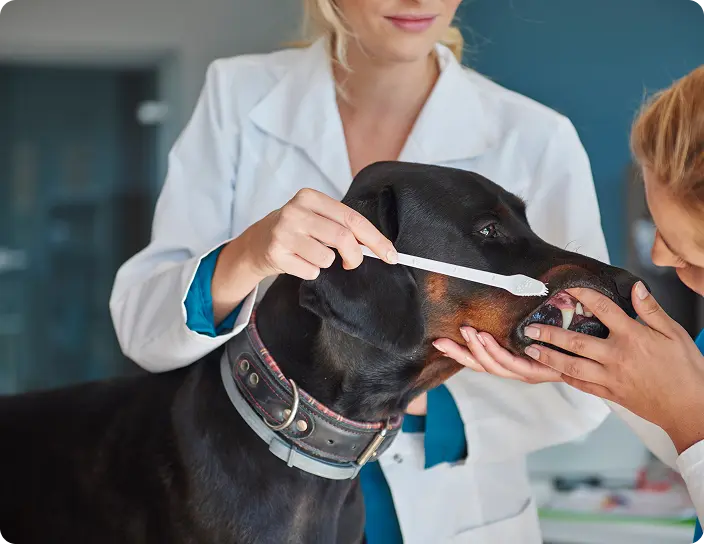
By around age three, most dogs and cats already show some degree of dental disease. What starts as plaque and tartar buildup can progress to periodontal disease, tooth loss and chronic pain and the bacteria from infected gums doesn't stay in the mouth. It can enter the bloodstream and affect the heart, liver and kidneys over time. Annual dental assessments and professional cleanings when recommended, are one of the highest-impact and most overlooked parts of a preventative plan.
How Do Nutrition and Weight Management Prevent Disease?
Obesity is one of the most common and most preventable health issues seen in companion animals contributing directly to joint disease, diabetes, heart strain and a measurably shorter lifespan. Every wellness visit should include a body condition assessment and diet guidance tailored to your pet's breed, age, activity level and any existing health conditions, rather than generic feeding advice.
What Does Screening Bloodwork Actually Catch?
Baseline bloodwork service evaluates kidney and liver values, complete blood cell counts and thyroid function. This panel is specifically designed to catch conditions like kidney disease, diabetes, and thyroid imbalance while they are still asymptomatic often the single most valuable diagnostic tool in a preventative program, particularly for pets over the age of seven.
Is Microchipping Really a Preventative Care Service?
Yes. It's a one-time, minimally invasive procedure that dramatically increases the odds a lost pet is reunited with their family. Given how much of Langley borders trails, greenbelts, and rural land where pets can easily wander off leash-range, permanent ID is considered a core part of a responsible preventative plan, not an optional extra.
How Often Should Puppies and Kittens Be Seen for Preventative Care?
Young pets need the most frequent monitoring of any life stage. Good care of puppies and kittens typically need a veterinary visit every three to four weeks until their initial vaccine series is complete, usually around 16 weeks of age. These early visits focus on completing the core vaccine series, deworming, monitoring growth and development, and discussing the right timing for spay or neuter. Once the initial series is finished, most young pets shift to a twice-yearly schedule through their first year.
How Often Should Adult Dogs and Cats Have a Wellness Exam?
For healthy adult pets roughly between one and seven years old, an annual wellness exam is generally sufficient. This yearly visit typically covers core vaccine boosters, a dental assessment, a weight and body condition check and baseline bloodwork to establish what "normal" looks like for your individual pet which becomes an important comparison point as they age.
What Changes About Preventative Care for Senior Pets?
Once a pet reaches roughly seven years of age (earlier for large-breed dogs), most veterinarians recommend shifting to twice-yearly wellness exams. Senior pet care leans more heavily on screening bloodwork, arthritis and mobility assessments, and closer monitoring for early signs of organ dysfunction, since aging pets are statistically more likely to develop kidney disease, thyroid imbalances, cognitive changes, or cancer. Catching these conditions in their earliest, most treatable stages is exactly what the more frequent senior-pet schedule is designed to do.
What Does a Preventative Care Schedule Look Like Across the Year?
Rather than a single annual appointment, many Langley pet owners find it useful to think of preventative care as a year-round rhythm:
- Spring is a natural time for the annual wellness exam and to refresh heartworm and tick prevention ahead of the warmer months.
- Summer often brings more outdoor activity, hiking, and camping, so a flea and tick check plus a dental assessment are worth prioritizing.
- Fall is a good checkpoint for any remaining vaccine boosters and a weight and nutrition review before pets become less active in colder months.
- Winter is often when senior pets benefit from a bloodwork panel and a check-in on joint health and mobility, since colder weather can worsen arthritis symptoms.
Your exact schedule should still be personalized by your veterinarian based on your pet's age, breed, and lifestyle — this general rhythm is simply a starting point.
How Much Does Preventative Pet Care Cost in Langley?
Wellness exams in the Langley area typically run $60–$120 CAD, with vaccines, bloodwork and parasite prevention priced separately depending on your pet's specific needs. While the exact total varies by clinic and by pet, preventative care is consistently less expensive over a pet's lifetime than treating an advanced illness that could have been caught earlier through routine screening. For current pricing specific to your pet, contact Walnut Grove Animal Hospital.
Preventative Care vs. Treating a Sick Pet: What's the Real Difference?
Preventive medicine is built around catching problems through routine exams and screening before symptoms appear. A sick-pet visit, by contrast, is reactive — it addresses symptoms that have already surfaced, which often means the underlying condition has had more time to progress. Preventive visits also tend to be calmer and less stressful for pets, since they aren't paired with pain, illness, or an unfamiliar emergency environment. And because problems are caught earlier, preventative care is generally the lower-cost path over the life of your pet.
Common Myths About Preventative Pet Care
"My pet seems totally healthy, so I can skip the yearly exam." Pets hide illness instinctively, and many serious conditions, including kidney disease and early cancers, show no outward symptoms until they're advanced. A normal-looking pet is exactly the pet preventative screening is designed for.
"Indoor cats don't need parasite prevention." Fleas, mosquitoes, and even some intestinal parasites can enter homes on other pets, on your shoes, or through window screens, so indoor cats still benefit from year-round protection.
"Vaccines last forever after the first round." Immunity from most core vaccines fades over time, which is why booster schedules exist — skipping boosters can leave a previously protected pet vulnerable again.
"Dental disease is just cosmetic." Bacteria from infected gums can enter the bloodstream and affect major organs, making dental health a whole-body issue, not just a matter of bad breath.
Warning Signs That Mean Your Pet Needs More Than a Routine Checkup
While preventative care is about staying ahead of problems, some signs mean you shouldn't wait for the next scheduled visit:
- Sudden weight loss or unexplained weight gain
- Increased thirst or more frequent urination
- Lethargy, hiding, or a noticeable drop in appetite
- Limping, stiffness, or reluctance to jump or climb stairs
- Persistent bad breath, drooling, or difficulty chewing
- Vomiting, diarrhea, or any change in stool that lasts more than a day
- New lumps, bumps, or changes to existing ones
If you notice any of these, contact Walnut Grove Animal Hospital directly rather than waiting for your pet's next scheduled wellness exam.
Why Choose Walnut Grove Animal Hospital for Preventative Pet Care in Langley?
- More than 40 years of veterinary experience and over 400,000 cases handled within the Langley community
- Open seven days a week — Monday to Friday 8:30 am to 7:00 pm, and Saturday and Sunday 9:00 am to 5:00 pm making it easier to fit wellness visits around your schedule
- Personalized, age-based wellness plans rather than a one-size-fits-all checkup
- On-site bloodwork, diagnostics, and modern equipment for faster answers, often within the same visit
- A team that treats clear communication as a priority, with no rushed appointments
Frequently Asked Questions About Preventative Pet Care in Langley
Q1: What is preventative pet care and why does it matter in Langley?Ans: Preventative pet care is proactive veterinary medicine — regular wellness exams, screening, vaccines, and parasite control — designed to catch health issues early, before they become serious or costly.
Q2: What's included in an annual pet checkup at Walnut Grove Animal Hospital?Ans: A preventative care plan bundles wellness exams, screening bloodwork, weight and nutrition monitoring, and a vaccine and parasite schedule into one ongoing, age-based program, rather than a single one-off checkup.
Q3: How is preventative care different for puppies and kittens versus senior pets?Ans: Young pets focus on completing their vaccine series and monitoring growth, while senior pets shift to more frequent screening bloodwork, weight management, and early disease detection roughly every six months.
Q4: What does a personalized pet wellness plan typically include?Ans: A wellness plan bundles annual or semi-annual checkups, screening bloodwork, vaccine scheduling, and parasite prevention into one coordinated, age-based care program tailored to your individual pet.
Q5: What bloodwork is done as part of routine preventative care?Ans: Baseline bloodwork usually checks kidney and liver values, blood cell counts, and thyroid function to catch issues like kidney disease or diabetes before symptoms appear.
Q6: How is preventive veterinary medicine different from treating a sick pet?Ans: Preventive medicine focuses on catching problems early through routine exams and screening, while sick-pet visits address symptoms that have already appeared; preventive care is generally lower-cost and less stressful for your pet.
Q7: How often should I book a wellness exam for my pet in Langley, BC?Ans: Once a year for healthy adult dogs and cats, and every six months for puppies, kittens, and senior pets (roughly age 7 and up).
Q8: Can an annual checkup catch health problems before symptoms appear?Ans: Yes, routine screening bloodwork and physical exams often flag kidney, thyroid or diabetic changes months before a pet shows any visible symptoms.
Q9: How much does a full preventative care wellness exam cost?Ans: Wellness exams in Canada typically run $60 to $120 CAD, with bloodwork and screening priced separately. Call Walnut Grove Animal Hospital in Langley, BC at (604) 888-2628 for current pricing.
Q10: Does preventative pet care include nutrition and weight guidance?Ans: Yes, weight checks and diet counselling are a standard part of every wellness exam, helping to prevent obesity-related joint and metabolic issues.
Ready to build a preventative care plan for your pet? Schedule a wellness exam at Walnut Grove Animal Hospital in Langley, BC.