




When your dog starts limping after the dog park, or your senior cat seems "just a little off," it's rarely obvious what's wrong from a physical exam alone. That's where veterinary diagnostics come in. At Walnut Grove Animal Hospital in Langley, BC, our team uses three core diagnostic tools: bloodwork, digital X-rays and ultrasound imaging to look beneath the surface and figure out what's really going on inside your pet.
Why Veterinary Diagnostics Matter for Dogs and Cats
Pets are experts at hiding illness. A cat with early kidney disease or a dog with a quietly enlarging tumor can look and act almost normal for months. Diagnostic imaging and lab testing exist to catch these problems before they become emergencies.
Used together, bloodwork, X-rays and ultrasound give our veterinarians three different "views" of your pet's health:
- Bloodwork shows how internal organs and blood cells are functioning at a metabolic level.
- X-rays reveal the size, shape and structure of bones and organs.
- Ultrasound shows real-time detail inside soft tissue that bloodwork and X-rays can't capture.
No single test tells the whole story which is why our Langley veterinary imaging services are typically used in combination, not isolation.
Pet Bloodwork in Langley BC: What It Detects and Why It's Routine
What does pet bloodwork actually check?
Our in-house laboratory allows us to run pet bloodwork in Langley BC quickly, often getting results back the same visit. Core panels typically include:
- Complete Blood Count (CBC): Evaluates red blood cells (screening for anemia), white blood cells (signs of infection or inflammation), and platelets (clotting ability).
- Comprehensive chemistry panel: Assesses kidney function, liver enzymes, electrolytes and overall metabolic health.
- Routine wellness screening: Flags early, symptom-free warning signs during annual exams.
- Chronic disease monitoring: Tracks conditions like diabetes, thyroid disease or kidney disease over time.
Pre-anesthetic bloodwork: why it's required before surgery
If your pet is scheduled for a spay, neuter, dental cleaning, or any procedure requiring anesthesia, our clinic will typically recommend pre-anesthetic bloodwork. This isn't just a formality — it specifically checks liver and kidney function to confirm your pet can safely metabolize and clear anesthetic drugs from their system. Think of it as a safety baseline that lets our veterinary team tailor the anesthesia plan to your pet's individual health status, not a generic protocol.
Senior pet bloodwork panel in Langley: how often is it needed?
Aging pets can develop health changes quickly, often before any outward symptoms appear. For this reason, we generally recommend a senior pet bloodwork panel once or twice a year for older dogs and cats. Regular senior screening allows our vets to catch conditions like kidney disease, liver changes, diabetes, or thyroid imbalances early — when they're most manageable.
Does my pet need to fast before bloodwork?
It depends on the panel. For many standard tests, a short fast of a few hours is recommended, since a recent meal can raise fat levels in the blood (lipemia) and skew results. Your vet team will tell you exactly how to prepare before your appointment.
Pet X-Ray Imaging in Langley BC: Seeing Bones, Joints and Internal Structures
What can a digital X-ray show?
Digital X-ray imaging lets our veterinarians quickly evaluate the skeletal system and internal structures of dogs and cats. At Walnut Grove Animal Hospital, veterinary imaging in Langley is used to assess:
- Bones and joints — fractures, arthritis, and skeletal abnormalities
- Trauma and injury — evaluating pets after falls, car accidents, or sudden lameness
- Chest and abdomen — examining internal organs for size, shape, or fluid changes
- Dental structures — assessing issues below the gumline during cleanings
- Pre-surgical planning — guiding treatment decisions before a procedure
When does my pet need an X-ray after an accident?
If your dog or cat shows limping, a visible limp, lethargy or signs of acute pain after a fall or impact, prompt X-ray evaluation is important. Radiographs are essential for identifying fractures, joint dislocations or hidden injuries to the chest or abdomen that may not be obvious from the outside.
Is pet X-ray safe?
Yes. Digital radiography captures clear images quickly, which helps minimize radiation exposure compared to older film-based systems making it a safe, low-stress diagnostic option for both routine and emergency use.
X-rays vs. bloodwork: what is the difference?
X-rays show structure — the physical shape, size and positioning of bones and organs, plus signs like fluid buildup. They don't measure how well an organ is functioning on a cellular level. That's why our vets often pair radiography with baseline bloodwork to get both the structural and metabolic picture at once.
Pet Ultrasound in Langley BC: Real-Time Imaging for Soft Tissue
How is ultrasound different from an X-ray?
While X-rays are best for bone and structure, pet ultrasound excels at evaluating soft tissue in real time. This makes it the go-to diagnostic for concerns that don't show up clearly on a standard exam or blood test. Our veterinary imaging services in Langley use ultrasound to evaluate:
- Liver, kidneys, bladder, and gastrointestinal tract
- Abdominal masses, fluid buildup, or changes in organ structure
- Reproductive health and pregnancy monitoring
- Unexplained pain, weight loss, vomiting or appetite changes
- Ongoing monitoring of previously diagnosed conditions
Abdominal ultrasound for pets: what to expect
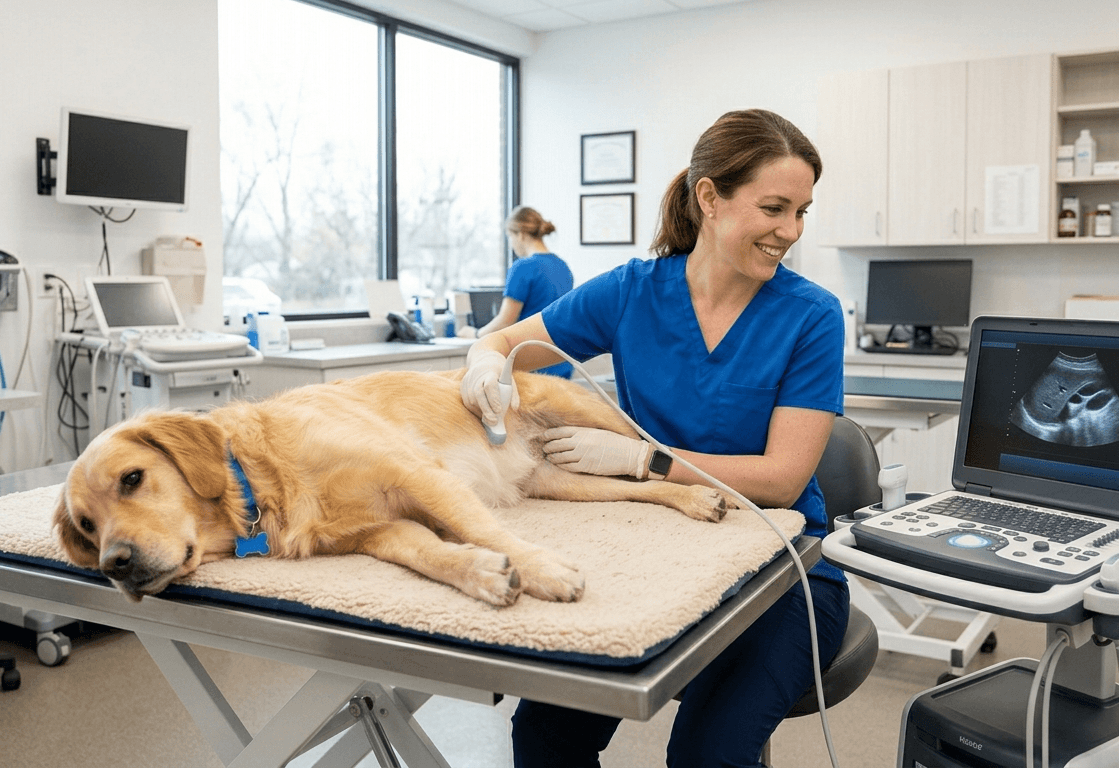
An abdominal ultrasound for pets is a non-invasive, painless procedure using high-frequency sound waves; there is no radiation involved. A small area of fur is typically clipped so the probe can make direct contact with the skin through acoustic gel, since ultrasound waves don't travel well through fur or air pockets. Most dogs and cats stay comfortable throughout with gentle handling; sedation is only used in cases of significant anxiety or physical pain.
If the scan involves the abdomen, fasting beforehand (such as skipping a meal) is usually recommended, since food or gas in the stomach can obstruct the view of nearby organs.
Cat pregnancy ultrasound in Langley
Ultrasound is also a key tool for cat pregnancy confirmation and monitoring as well as for dogs involved in breeding programs. It allows our veterinary team to check on reproductive health and pregnancy progress without any discomfort to the animal.
How soon will I get results?
Ultrasound images are routinely sent to a board-certified veterinary radiologist for a full review and formal report, ensuring an expert second read on top of our in-clinic assessment.
How Bloodwork, X-Rays and Ultrasound Work Together
A common question we hear at our Langley animal hospital is, "Why does my pet need more than one test?" The honest answer: each diagnostic tool has a different job. Bloodwork reveals how organs are functioning at a metabolic level but can't show physical structure. X-rays capture bone structure, joint alignment, and organ size or shape but offer limited detail on soft tissue. Ultrasound fills that gap, showing real-time detail of soft tissue, fluid and masses though it's less useful than X-ray for evaluating bone.
For example, a dog with vomiting and lethargy might get bloodwork to check organ function, an X-ray to rule out a swallowed foreign object and an ultrasound to get a closer look at the intestines or liver. Combining these tools helps our veterinarians reach an accurate diagnosis faster and build a treatment plan with confidence rather than guessing.
Frequently Asked Questions About Pet Diagnostics in Langley
Q1: How long does it take to get bloodwork results?
A: Because we run many tests in our in-house laboratory, results are often available the same day, sometimes within the same visit.
Q2: Do I need to book bloodwork, X-rays and ultrasound as separate appointments?
A: Not always. Your veterinarian will recommend the specific combination of tests needed based on your pet's symptoms, age and health history and these can often be coordinated in one visit.
Q3: Will my pet need to be sedated for X-rays or ultrasound?
A: Most pets tolerate both procedures well with gentle handling and positioning aids. Sedation is only considered for pets experiencing significant pain or anxiety.
Q4: How often should senior pets get diagnostic screening?
A: We generally recommend a senior bloodwork panel once or twice yearly, with X-rays or ultrasound added as needed based on symptoms or ongoing conditions.
Q5: Is diagnostic imaging useful for pets with no obvious symptoms?
A: Yes. Because pets often mask illness, routine bloodwork and imaging as part of preventative care can catch problems like early kidney disease or small tumors well before symptoms appear.
Book Pet Diagnostics in Langley
Whether your pet needs routine senior bloodwork, pre-anesthetic testing before a procedure, an X-ray after an injury, or an abdominal or pregnancy ultrasound, the team at Walnut Grove Animal Hospital is here to help you get clear answers. Schedule an Appointment!