

If you share your home with a dog or cat in Langley, you may be wondering whether microchipping is really worth it, whether it hurts, and what you have to do once it is done. This guide answers those questions in plain language.
A microchip is a permanent ID, about the size of a grain of rice, placed under your pet's skin in a few seconds. If your pet ever gets lost, any vet clinic, shelter or animal control office can scan it and use the number to find your contact details. Collars and tags can fall off. A chip stays.
The step many owners miss is registration. A chip only helps if it is registered and your phone number and address are current. In an Ohio State University study of more than 7,700 microchipped shelter animals, outdated contact information was the biggest reason owners could not be found.
This guide is especially useful if you:
- are bringing home a new puppy or kitten
- have adopted or rescued a pet and are not sure whether it is chipped
- recently moved, or changed your phone number or email
- want a low-stress way to protect an indoor cat or a dog that likes to wander
- want to know exactly what to do if your pet goes missing
Below you will find how chips work, what the procedure is like, what it costs, how to register a chip in BC, and what to do if your pet is lost. It is written by the team at Walnut Grove Animal Hospital in Langley.
What Is a Pet Microchip and How Does It Work?
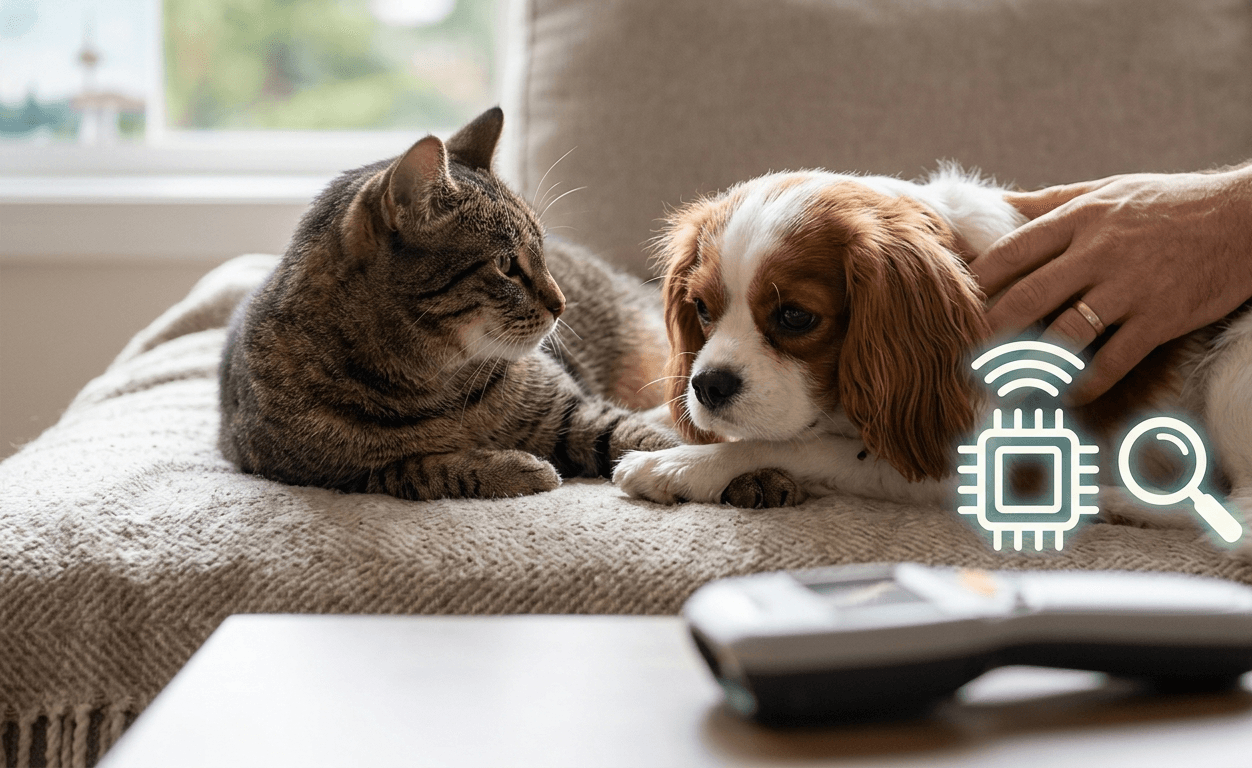
A pet microchip is a tiny electronic capsule, sealed in biocompatible glass, that holds one unique identification number. It has no battery and no GPS. When a vet clinic, shelter or animal control officer passes a handheld scanner over your pet, the scanner's signal briefly powers the chip, and the chip sends back its number. Staff then look that number up in a pet-recovery registry to find your contact details.
Is a microchip a GPS tracker?
No. A microchip cannot show where your pet is. It is an identification tool: it only helps once someone finds your pet and has it scanned. If you want live location tracking, that needs a separate GPS collar, and a microchip is still worth having as your pet's permanent backup ID.
What information is stored on a microchip?
Only the chip's ID number. Your name, phone number and address are stored in the registry, not on the chip. That is why registering the chip and keeping the registry up to date matters as much as the implant itself.
How Is a Microchip Implanted in a Dog or Cat?
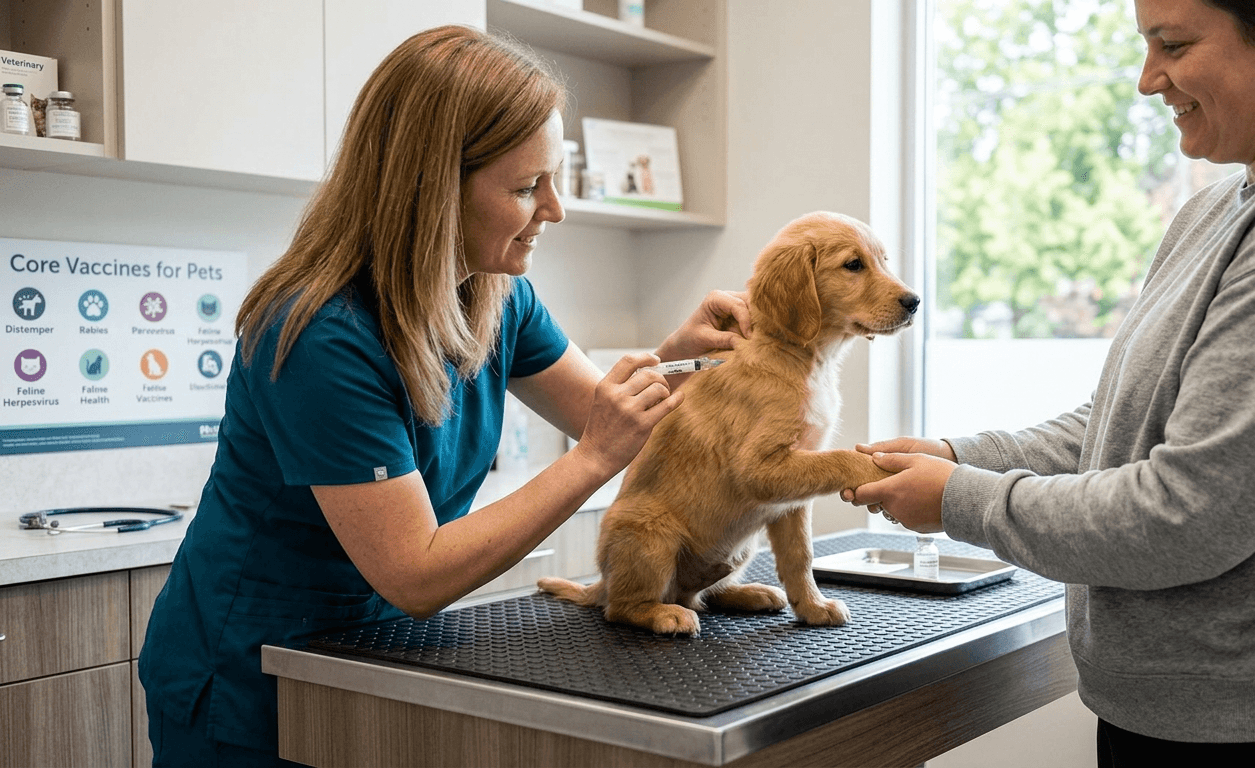
Microchipping is a quick, minimally invasive procedure, and most pets handle it like a routine vaccine. Here is what happens at a typical appointment:
- Pre-scan. The vet scans your pet first to check whether a chip is already in place.
- Implantation. The chip is placed with a sterile applicator under the loose skin between the shoulder blades. It takes seconds and causes only brief, mild discomfort.
- Confirmation scan. The vet scans again to confirm the chip reads correctly and note its number.
- Registration guidance. Our team gives you the registry information so you can link the chip number to your contact details.
The implant can be done during a routine wellness visit or while your pet is already under anesthesia for a spay or neuter procedure, which spares you a separate trip.
How Much Does Pet Microchipping Cost in Langley, BC?
Expect to pay about 40–75 CAD one time for the microchip and implantation at a Langley clinic. A registry fee to store your contact details is separate. That makes microchipping one of the lowest-cost, longest-lasting safety measures you can give a pet.
What does the microchipping fee include?
At Walnut Grove Animal Hospital, microchipping covers:
- the microchip and its safe, minimally invasive placement
- scanning to confirm the chip is in place and reads correctly
- registration guidance, so your pet's information is stored correctly
What affects the final cost of Pet Microchipping?
- Registry choice. Registries differ in fees and in how they handle updates, so ask us which option suits you before you register.
- Timing. Placing the chip during a wellness visit or during another procedure, such as a spay or neuter, saves you a separate appointment.
- Updates. Check your registry's policy on changing contact details, since you will need to do this if you move or change your number.
For an exact quote for your pet, call (604) 888-2628.
Why Microchip Your Pet? Lost Pet Identification in Langley
A microchip gives your pet an ID that cannot fall off, fade or be slipped out of. Collars and tags are still worth using, but they get lost, snagged or removed. A chip stays with your pet for life, and every vet clinic, shelter and animal control office can scan for it.
Do microchips really help lost pets get home?
Yes, and the data is strong. A large Ohio State University study followed 7,704 microchipped animals across 53 shelters and found owners for 72.7% of them. Compared with stray animals overall, microchipped cats were returned about 20 times as often and microchipped dogs about 2.5 times as often.
What is the biggest reason microchipped pets are not reunited?
Out-of-date contact details. In that same study, the main reason owners could not be found was outdated registry information, and bad or disconnected phone numbers alone accounted for 35.4% of the cases where owners were not located. The lesson is simple: a registered, current chip works, and an unregistered one does not.
Do indoor cats and small dogs need a microchip?
Yes. Indoor cats slip out through open doors, and small dogs can squeeze through gaps in fences. A chip protects pets in the moments you least expect to need it, including moves, renovations, storms and holidays with guests coming and going.
Is Pet Microchipping Safe? Pain, Side Effects and Myths
Yes. Microchipping is a quick, safe and minimally invasive procedure. The chip is about the size of a grain of rice and is placed under the loose skin between the shoulder blades, causing only minimal, temporary discomfort. Most pets barely react.
Does microchipping hurt?
The sensation is similar to a routine injection and passes within moments. Because it takes seconds, most dogs and cats are calm and back to normal right away.
Can a microchip stop working or move?
Chips are built to last a lifetime, but it is smart to confirm that yours still reads. We scan microchips during annual wellness exams to check that they are working, reading accurately and still in the right position.
Common microchip myths
- "It tracks my pet." It does not. It stores an ID number only.
- "It is registered automatically." It is not. You must register the number yourself.
- "My indoor pet doesn't need one." Escapes happen to indoor pets too.
- "It replaces a collar and tag." It works best alongside them, since a tag lets a neighbour call you immediately.
When Should You Microchip a Puppy, Kitten or Adult Pet?
The best time is as early as possible, and we recommend microchipping for all puppies and kittens as part of their early care. If your pet is older or newly adopted, it is never too late. Bring them at any time.
- Puppies and kittens: add it to their first wellness visits, alongside their vaccinations.
- Pets being spayed or neutered: the chip can go in during the same procedure, so there is no extra appointment.
- Adopted or rescued pets: have your pet scanned first. If a chip is already there, we help you update the registry with your details instead of adding a second chip.
- Adult pets: book a quick visit, or ask us to add it at the next annual exam.
Where Can You Microchip a Dog or Cat in Langley, BC?
Walnut Grove Animal Hospital provides pet microchipping in Langley for both dogs and cats, with implantation done in seconds during any wellness visit.
How Do You Complete Pet Microchip Registration in BC?
After implantation, you register the chip's unique ID number and your contact details in a pet-recovery database, and you update it whenever your details change. Implanting the chip is only the first step. Without registration, a scan returns a number that leads nowhere.
- Get your chip number. We record it at your appointment and give you the registry information.
- Register online or by phone. Enter your pet's chip number, your name, address, phone and email.
- Add a backup contact. List a second person who can be reached if you cannot.
- Confirm the registration is active. Ask us to scan the chip at a later visit and check that the record matches.
- Keep it current. Update the registry when you move, change your phone number or email, or transfer ownership.
Dog licensing is handled separately by your municipality. A microchip complements a licence but does not replace it.
What Should You Do If Your Pet Goes Missing in Langley?
Act fast and use every channel at once. A registered chip makes each step below more effective.
- Search close to home. Check hiding spots first, call your pet's name and bring a familiar treat or toy.
- Call local vet clinics, shelters and animal control. Give them your pet's microchip number, description and photo so they can flag your pet if it is brought in.
- Check your registry record. Confirm your phone number and email are right, and report your pet as lost if your registry offers that option.
- Share your pet's photo locally. Post to Langley community groups and neighbourhood pages, and put up posters with your phone number.
- Ask anyone who finds a pet to get it scanned. Any vet clinic or shelter can scan a found animal for a chip.
If you find a stray pet, take it to a vet clinic or shelter for a scan. A chip number can turn a stressful day into a quick reunion.
Pet Microchipping FAQs
Q1: How much does pet microchipping cost in Langley, BC?
A: About 40–75 CAD one time for the chip and implantation, plus a separate registry fee to store your contact details.
Q2: Is microchipping safe for dogs and cats?
A: Yes. It is a quick, minimally invasive procedure with minimal temporary discomfort.
Q3: How long does microchipping take?
A: The implant itself takes seconds. Allow a little extra time at your visit for the scan check and registration guidance.
Q4: Where can I microchip a dog near me in Langley?
A: Walnut Grove Animal Hospital offers same-day microchip implantation and registration support for dogs, seven days a week.
Q5: Is there a cat microchip clinic in Langley?
A: Yes. We microchip cats during routine visits or alongside spay and neuter surgery.
Q6: Can a microchip be placed during spay or neuter surgery?
A: Yes. It can be placed during a preventative care exam or while your pet is already under anesthesia for a procedure such as a spay or neuter.
Q7: How does a microchip help with lost pet identification in Langley?
A: Vets, shelters and animal control can scan the chip, read its ID number and look up your contact details in the pet-recovery registry.
Q8: How do I register my pet's microchip in BC?
A: After implantation, register the chip number and your contact details with a pet-recovery registry, and update it whenever you move or change your phone number.
Q9: Can a vet check that my pet's microchip still works?
A: Yes. We scan chips at annual wellness exams to confirm they are working, reading accurately and properly positioned.
Q10: Do I need to re-register my pet's chip after moving?
A: You do not need a new chip, but you must update the address and phone number in the registry. Outdated details are the most common reason microchipped pets are not reunited.
Protect Your Pet Today: Book Microchipping at Walnut Grove Animal Hospital
A few seconds and a one-time fee can be the difference between a lost pet and a quick reunion. Our Langley team makes it simple: we place the chip, confirm it reads, and walk you through registration so your pet's ID is ready to work from day one.
- Safe, minimally invasive microchip placement during a routine appointment
- Scanning and verification to confirm correct placement
- Registration guidance so your details are stored correctly
- Placement alongside a wellness visit or spay and neuter surgery
- Lost pet identification support when a scanned chip helps bring a pet home
Ready to book?
- Call (604) 888-2628
- Visit us at 101A-20995 88 Ave, Langley, BC V1M 2C9
Learn more on our pet microchipping service page, or ask about preventative care, puppy and kitten care and vaccinations at the same visit.