

Vaccines are one of the simplest, most affordable ways to protect your pet, yet they are also one of the things pet parents feel most unsure about.
Maybe you are searching "dog vaccine clinic near me" with a wriggly new puppy on your lap. Maybe your cat has never left the house and you are wondering if shots are really necessary. Or maybe your dog's rabies certificate has quietly expired and the groomer just asked to see it.
You are not alone and the answers are simpler than they seem. This guide walks you through everything Langley pet parents ask us most: which vaccines your dog or cat needs, the schedule from 6 weeks to adulthood, how rabies fits in, what's normal after a shot and what it all typically costs. No confusing jargon, just clear answers.
What Vaccines Does My Pet Need in Langley?
Dogs need core vaccines against rabies, distemper, adenovirus and parvovirus (together called DHPP). Cats need rabies and FVRCP (feline herpesvirus, calicivirus and panleukopenia). Lifestyle vaccines such as Bordetella, leptospirosis and feline leukemia are added based on your pet's exposure risk. Puppies and kittens usually start at 6–8 weeks, with boosters every 3–4 weeks until about 14–16 weeks old.
Need an appointment? Walnut Grove Animal Hospital provides pet vaccinations in Langley, BC, 7 days a week. Call or request an appointment online.
Why Are Pet Vaccinations Important?
Vaccinations protect dogs and cats from serious, highly contagious and sometimes life-threatening infectious diseases. They train your pet's immune system to recognise a disease before they are ever exposed to it, so their body can fight it off faster, or avoid severe illness altogether.
Vaccines also protect the wider community. When most pets in a neighbourhood are vaccinated, outbreaks of diseases like parvovirus and distemper are far less likely to spread through parks, trails, daycares and boarding facilities. That matters in an active community like Langley, where dogs share off-leash areas, trails and dog parks year-round.
The main benefits of vaccinating your pet:
- Prevents severe, expensive and sometimes fatal illness
- Builds a strong immune foundation during puppy and kitten development
- Meets the proof-of-vaccination requirements of boarders, groomers, trainers and daycares
- Supports travel, including trips across the border
- Protects people too, in the case of rabies, which can spread from animals to humans
What Are Core vs. Non-Core (Lifestyle) Vaccines?
Veterinarians split vaccines into two groups. Core vaccines are recommended for nearly every pet. Non-core (lifestyle) vaccines are recommended only when your pet's environment, travel or exposure makes them worthwhile.
Core vaccines for dogs
- Rabies: protects against the rabies virus, which is fatal once symptoms appear and can spread to humans.
- Distemper (part of DHPP): protects against canine distemper virus, which attacks the respiratory, digestive and nervous systems.
- Adenovirus (part of DHPP): protects against infectious canine hepatitis, which can damage the liver, kidneys and eyes.
- Parvovirus (part of DHPP): protects against canine parvovirus, which causes severe and often deadly vomiting and diarrhea, especially in puppies.
Core vaccines for cats
- Rabies: protects against the rabies virus.
- FVRCP: protects against feline herpesvirus (rhinotracheitis), calicivirus and panleukopenia (feline distemper).
Non-core (lifestyle) vaccines
- Bordetella (kennel cough): for dogs that board, attend daycare or training classes, visit groomers or mix with many dogs.
- Leptospirosis: for dogs exposed to standing water, wildlife, farm areas or damp environments.
- Feline leukemia (FeLV): for cats that go outdoors or live with other cats.
Not sure which group your pet falls into? A quick personalized vaccine consultation lets your vet review lifestyle, age, health history and exposure risk, then build a plan around your pet rather than a one-size-fits-all package. The goal is full protection without unnecessary shots.
Puppy Vaccination Schedule in Langley
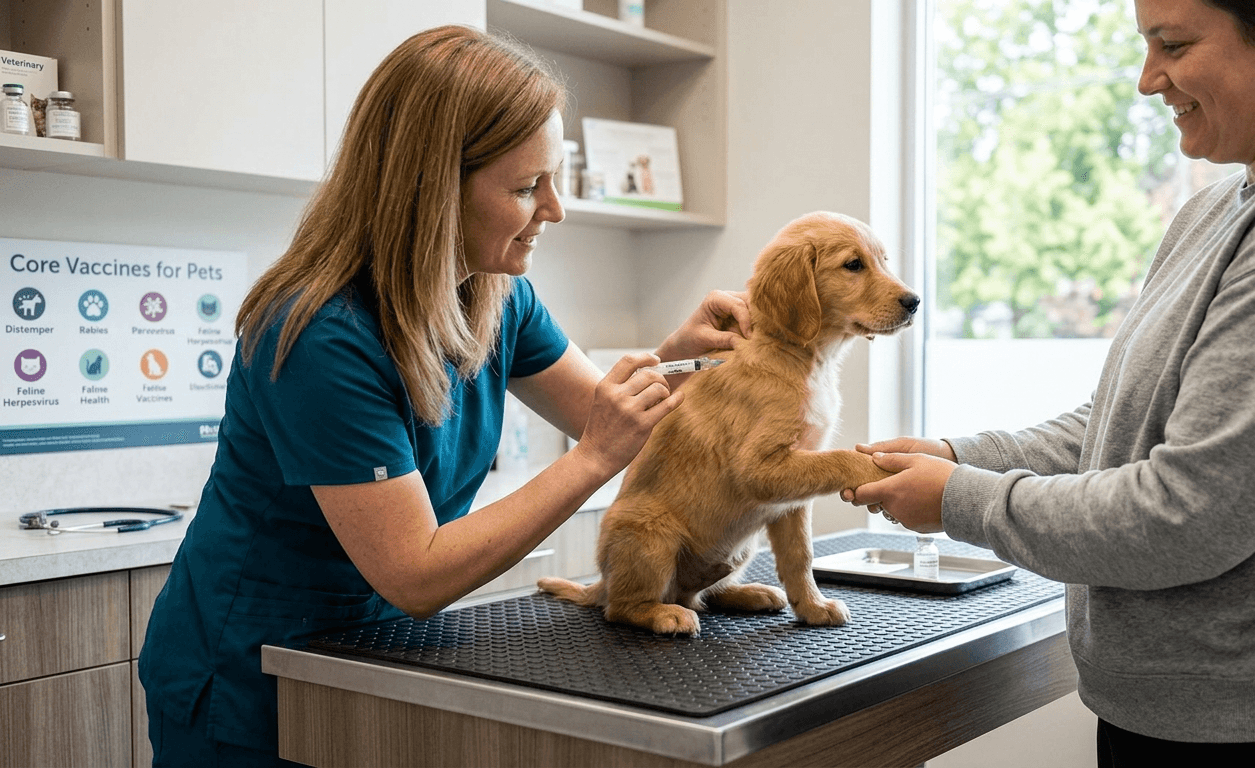
When should a puppy start vaccines? Puppy vaccines typically begin at 6–8 weeks of age, with boosters every 3–4 weeks until the series is complete at around 14–16 weeks old.
Why a series and not a single shot? Puppies are born with temporary antibodies from their mother. Those antibodies protect them early on but can also block a vaccine from working. Since no one can know exactly when they fade in each puppy, a series of boosters makes sure the vaccine takes hold at the right time.
Typical puppy vaccine timeline
- 6–8 weeks: first DHPP vaccine and a puppy wellness exam.
- 9–12 weeks: DHPP booster, and a chat about lifestyle vaccines such as Bordetella.
- 12–16 weeks: final DHPP booster, plus the rabies vaccine at the age your vet recommends.
- 1 year: adult booster visit.
- Every 1–3 years after that: boosters based on the vaccine and your vet's protocol.
This is a general guide. Your veterinarian will tailor the exact timing to your puppy's age, health and lifestyle. If you miss a dose, don't panic: your vet can adjust the schedule.
Puppy vaccination tips
- Bring any paperwork from the breeder or shelter, including previous vaccines and deworming.
- Be careful with early outings. Until the series is complete, avoid dog parks and areas with unknown dogs, and talk to your vet about safe, controlled socialization.
- Pair vaccines with parasite prevention. Puppies often need deworming and flea/tick protection alongside their shots. See our parasite prevention services.
- Start the right way. Our puppy & kitten care program covers vaccines, exams and early-life guidance in one place.
Cat and Kitten Vaccination in Langley
Whether your cat lives on the couch or patrols the backyard, vaccines are a core part of feline health, and indoor cats are not exempt. Indoor cats can still be exposed through open doors, visitors, other pets or an escape.
Kitten vaccine schedule
Like puppies, kittens usually start at 6–8 weeks, with boosters every 3–4 weeks until about 14–16 weeks of age.
- 6–8 weeks: first FVRCP vaccine and a kitten wellness exam.
- 9–12 weeks: FVRCP booster, and FeLV discussed if it applies to your kitten.
- 12–16 weeks: final FVRCP booster, plus the rabies vaccine.
- 1 year: adult booster visit.
Which vaccines do adult cats need?
- Rabies and FVRCP are recommended for nearly all cats.
- Feline leukemia (FeLV) is recommended if your cat goes outdoors or lives with other cats.
Cat vaccination in Langley doesn't have to be stressful. A calm, low-stress approach and a team that understands feline behaviour make a big difference, especially for nervous cats.
Rabies Shot for Dogs in Langley: Is It Required?
Rabies is a fatal disease once symptoms appear and it can spread from animals to people. That is why the rabies vaccine is considered a core vaccine for both dogs and cats.
Is the rabies vaccine legally required in Langley, BC? Rabies vaccination is not mandated province-wide in BC. However, most boarding facilities, groomers, daycares and travel providers require proof of current rabies vaccination and it is strongly recommended for every dog regardless. For the latest local rules, ask us about Langley Township requirements when you book.
Why rabies vaccination still matters in Langley
- Pets can encounter wildlife, including bats, raccoons and other animals, even in suburban neighbourhoods.
- Pets with unknown vaccination status who bite or are exposed to a potentially rabid animal can face serious consequences, including quarantine.
- Travel, boarding and grooming appointments almost always require a valid certificate.
What to bring for a rabies shot
- Your dog's previous vaccination records (if any)
- Your boarding, grooming or travel requirements, so we can match the certificate to what you need
- Any questions about timing, especially for puppies or newly adopted dogs
Need your dog's rabies vaccine updated? Request an appointment.
How Often Do Adult Pets Need Vaccine Boosters?
It depends on the vaccine. Some core vaccines provide protection for up to 3 years, while others, such as many lifestyle vaccines, need annual re-vaccination.
- Core vaccines (DHPP, FVRCP, rabies): often every 1–3 years, depending on the vaccine and your pet's history.
- Lifestyle vaccines (Bordetella, leptospirosis, FeLV): often yearly for as long as your pet's exposure risk continues.
Your vet will confirm the right interval for your pet.
Pro tip: Vaccine tracking makes this easy. At Walnut Grove Animal Hospital we keep your pet's booster history on file so you know exactly what is due and when.
Vaccine Reactions: What's Normal and What's Not
Most pets handle vaccines very well. Mild, short-lived side effects are common and usually nothing to worry about.
Normal (usually 24–48 hours):
- Mild soreness or swelling at the injection site
- Tiredness or lower energy
- Slightly reduced appetite
Call your vet or seek urgent care right away if you see:
- Facial swelling
- Repeated vomiting
- Difficulty breathing
- Hives or severe itching
- Collapse or extreme lethargy
Serious reactions are rare, but they need immediate veterinary attention. If you are worried, contact us. For after-hours emergencies, contact your nearest 24-hour emergency vet.
How Much Do Pet Vaccinations Cost in Langley?
Vaccine costs in BC typically run roughly 30–60 CAD per vaccine. Puppy and kitten series often work out cheaper through discounted combo packages. The final cost depends on which vaccines your pet needs, their age and whether an exam is included.
What affects the price:
- Core vs. lifestyle vaccines
- Puppy/kitten series vs. adult boosters
- Whether it is bundled with a wellness exam, parasite prevention or other preventative care
- Your pet's size, history and individual needs
Pet insurance generally does not cover routine vaccines, so it's helpful to budget for them as part of your pet's regular preventative care. Contact Us for a current quote for your pet.
How to Choose a Dog Vaccine Clinic Near You
Searching for a "dog vaccine clinic near me"? Here's what to look for:
- A structured core vaccine protocol. Evidence-based, not one-size-fits-all.
- Clear puppy and kitten series scheduling. You should leave each visit knowing the date of the next one.
- Booster tracking and reminders. So nothing slips through the cracks.
- Personalized consultations. Your pet's lifestyle, not a generic package, should drive recommendations.
- Convenient hours. Evening and weekend appointments make it easier to stay on schedule.
- Complete care under one roof. Exams, parasite prevention, microchipping, dental care and more.
- Easy booking. Phone and online options, with transparent answers.
Walnut Grove Animal Hospital in Langley offers all of the above and is open 7 days a week.
What to Expect at Your Pet's Vaccine Appointment
- Quick health check. Your vet makes sure your pet is healthy enough to vaccinate.
- Lifestyle chat. We ask about boarding, grooming, travel, outdoor time and other pets.
- Custom vaccine plan. Only the vaccines your pet actually needs.
- Gentle administration. Quick, calm and as stress-free as possible.
- Next steps. We explain what to watch for, schedule boosters and update your records.
Tip: Bring any previous vaccine records, and let us know about prior reactions, medications or health conditions.
How Walnut Grove Animal Hospital Helps
At Walnut Grove Animal Hospital, we help Langley pet parents keep their dogs and cats protected at every life stage, without unnecessary treatments.
What we offer:
- Core vaccinations for dogs and cats against serious, highly contagious diseases
- Lifestyle-based vaccines matched to your pet's environment, travel and exposure risks
- Structured puppy and kitten vaccine schedules that safely build immunity during early development
- Adult booster vaccinations to maintain long-term protection
- Personalized vaccine consultations to design a plan around your pet
- Booster tracking so you always know what's due next
Why Langley families choose us:
- Evidence-based vaccine protocols
- Gentle, personalized care for every pet
- One-stop convenience: vaccines pair easily with preventative care, parasite prevention, microchipping and boarding
- Open 7 days a week with evening hours on weekdays
Book Your Pet's Vaccination in Langley Today
Whether you have a brand-new puppy, a kitten ready for their first shots or an adult dog or cat due for boosters, Walnut Grove Animal Hospital is here to help.
Related services: Puppy & Kitten Care · Preventative Care · Parasite Prevention · Microchipping